A tool-kit for children diagnosed with alternating diversional squint. Created to make eye-strengthening exercises fun and engaging for both the child and the parent.



Illustration
Graphics
Packaging
Research
Prototyping
User Testing

Packaging Design
Illustration
Research
Prototyping
User Testing
In New Zealand, primary schools are not allocated funding for additional autism aid until the Ministry of Education receives confirmation of an official diagnosis for each student. With the average age of diagnosis being around seven, many children can go without the necessary support and resources for almost two years.
This gap in assistance can be especially concerning, as these children are already at risk of delays in developing emotional intelligence compared to their peers. Without proper guidance, they may struggle to recognise, understand both their emotions and the emotions of those around them. This can result in meltdowns and social misunderstandings within the classroom.
I chose to create a tactile game that offers reflection and group learning in order to engage with the children.
By creating a space for reflection and interaction, the students can learn about themselves and each other in a playful yet thoughtful way.
Alternating diversional squint is a condition in which a patient’s eyes fail to align properly, resulting in double vision. To help strengthen these eye muscles, orthoptists often recommend eye exercises where the patient is required to wear an eyepatch and use only one eye for extended periods of time.
However, parents of children aged 4-6 diagnosed with alternating diversional squint often struggle to get their child to participate in the treatment exercises due to the child finding the treatment to be mundane and unengaging.
We chose to gamify the eye-strengthening exercises and create a full tool kit for parents and children to use together. The toolkit's components had no set rules in order to keep the children's imaginations active, and keep them wanting to come back to the tool kit everyday.

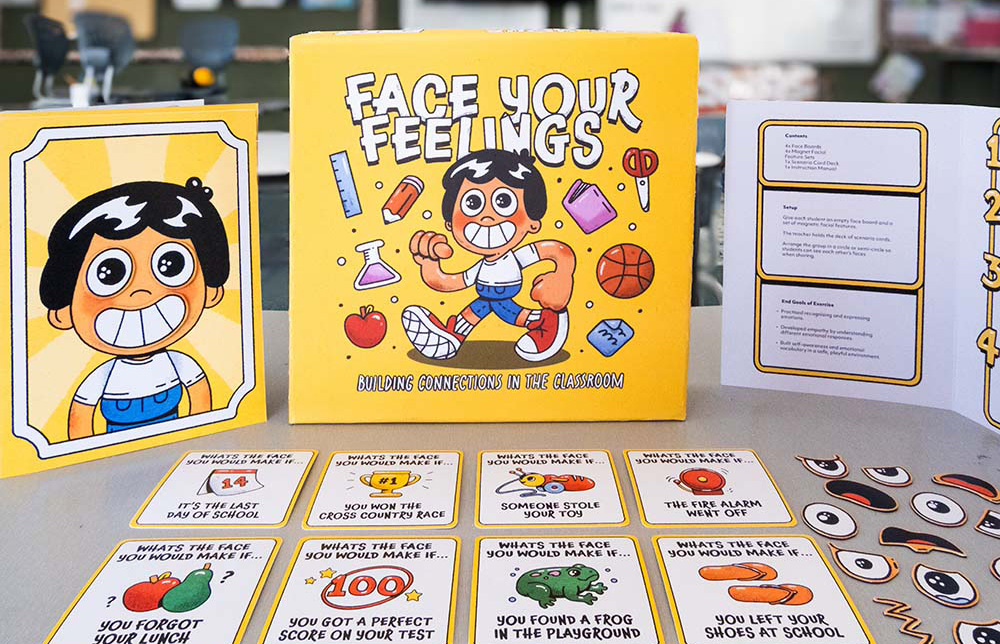
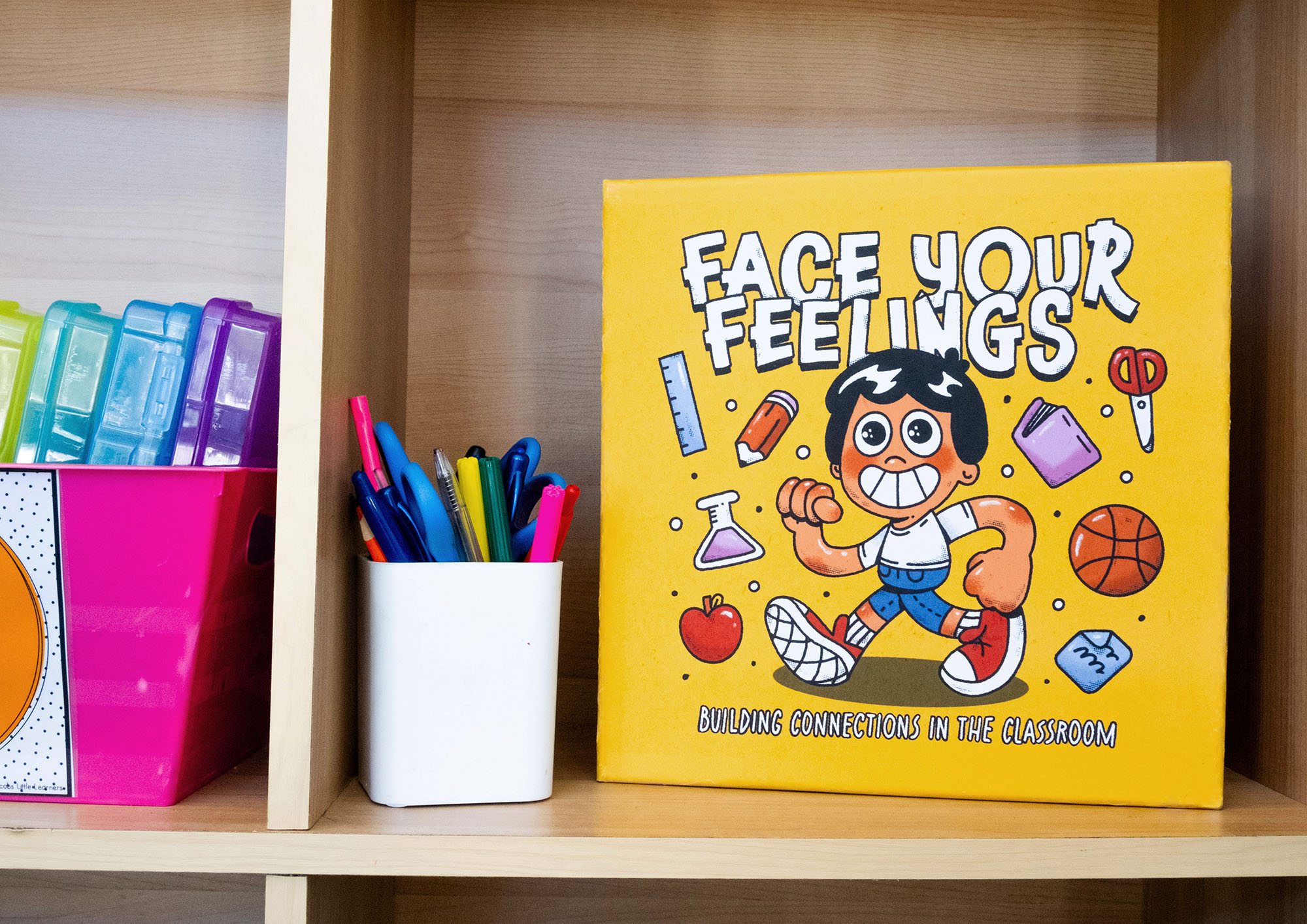
Face Your Feelings includes graphics that are bright, bouncy and full of character. This was designed to encourage the children to interact while also reflecting the brand values.
In addition to this, the illustrations have been tailored specifically towards a kiwi audience, by featuring iconic NZ items such as Buzzy Bee, gumboots and chocolate fish.
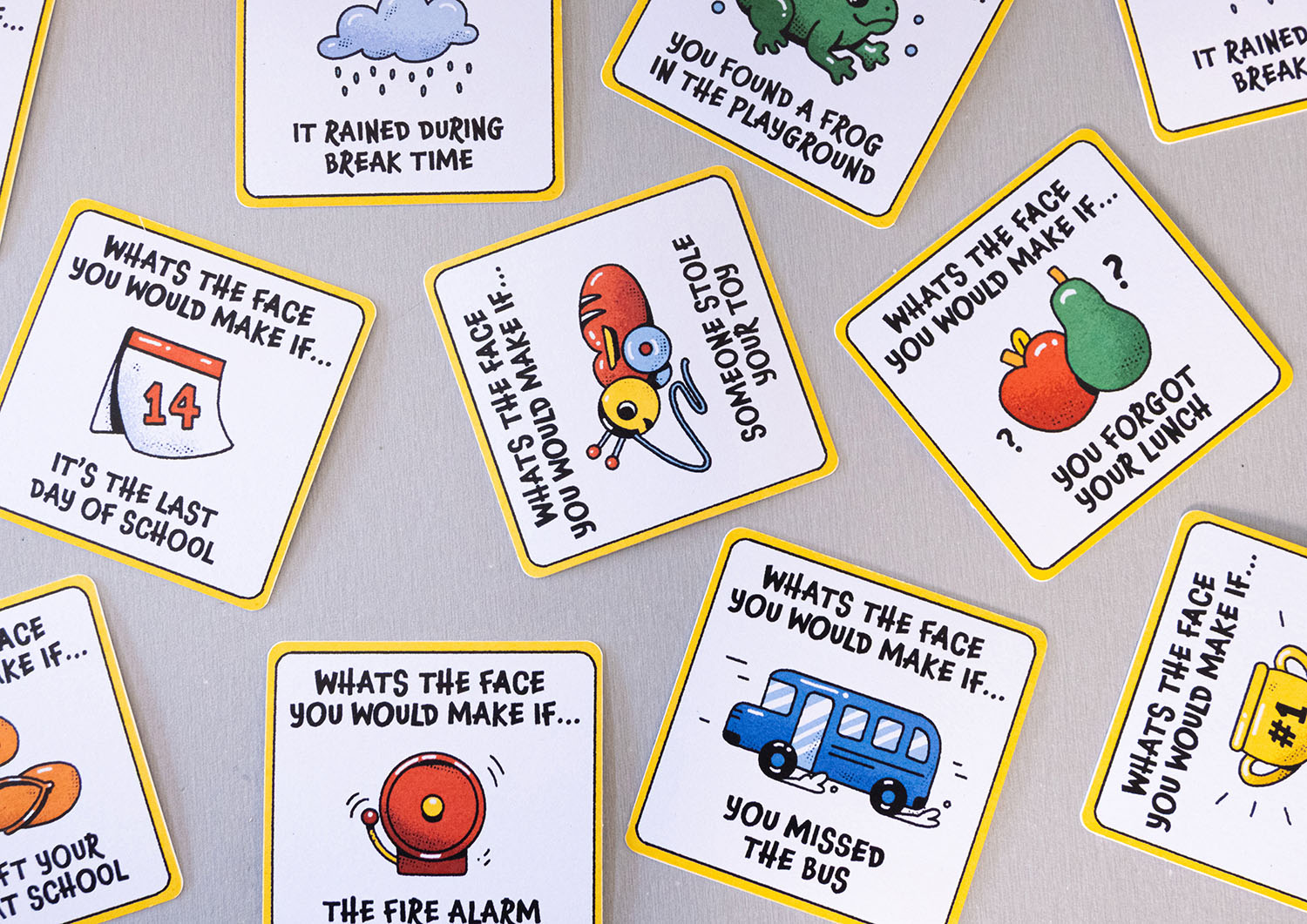
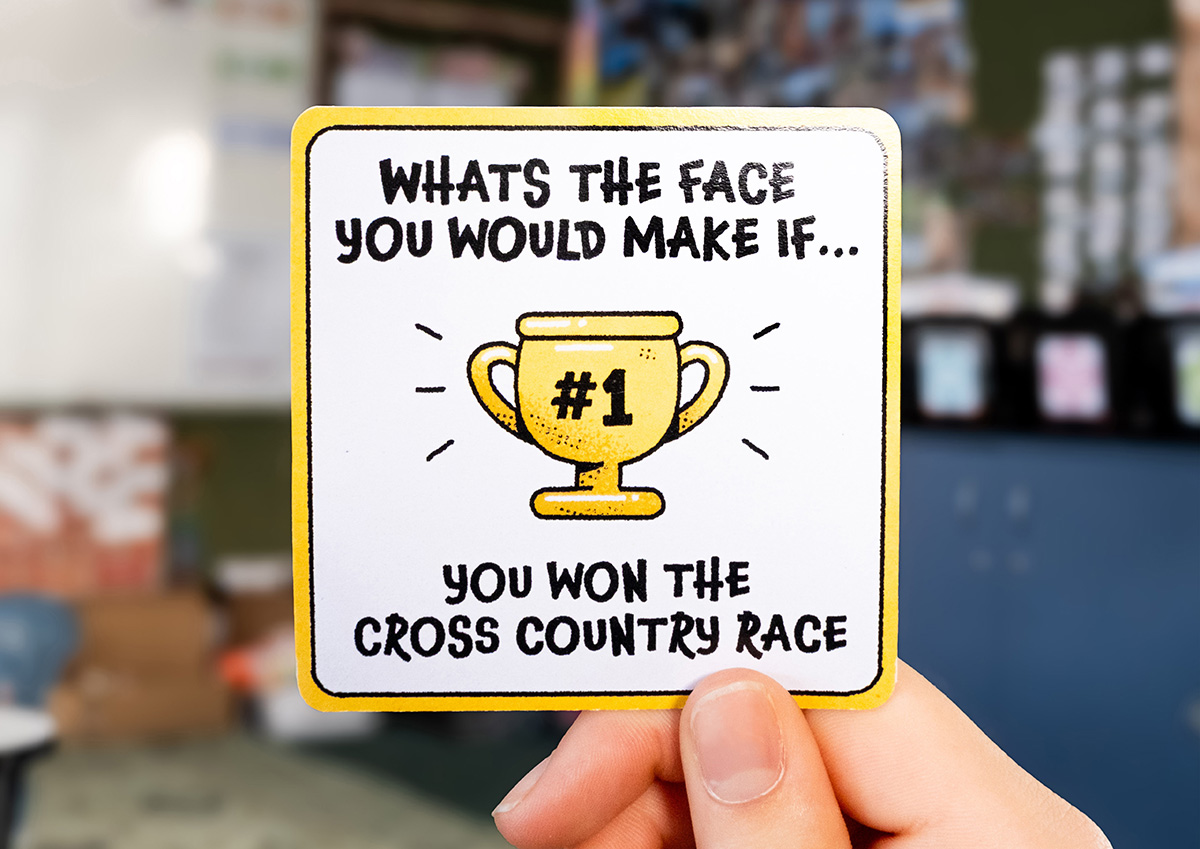
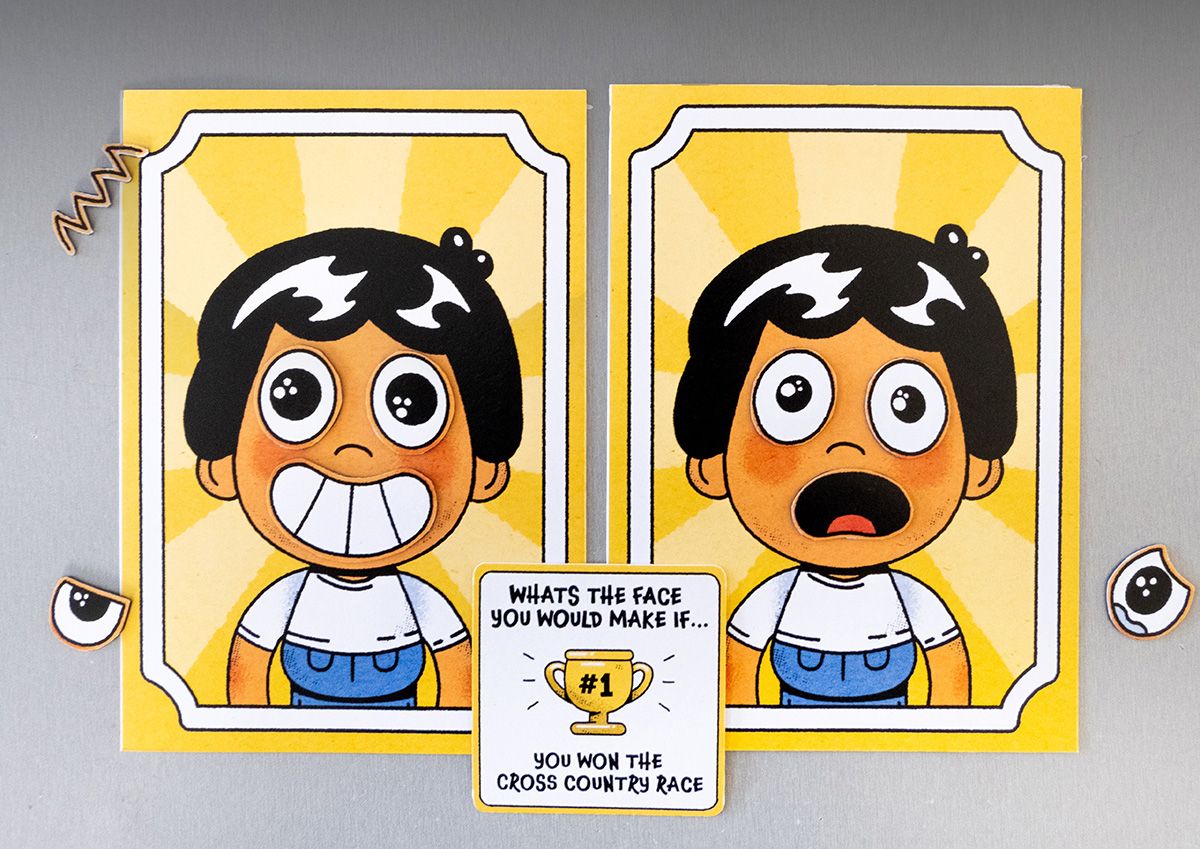
Students gather in a group while the teacher draws a scenario card and reads it aloud.
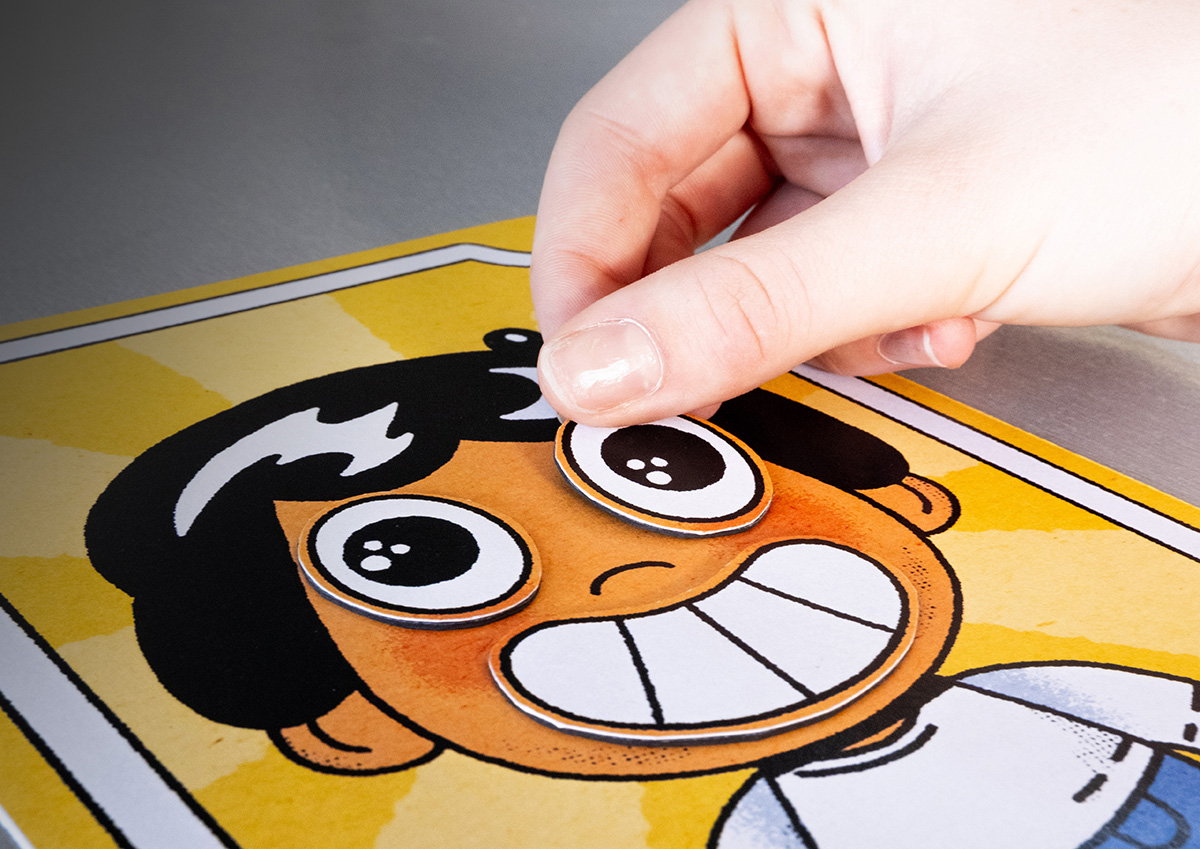
Participants then reflect on how they might react in the situation and begin building the face they would make using the magnets.
There are no set faces to make, allowing the children to explore their imaginations and create something that feels personal and real.
Once everyone has made a face, the students can begin comparing their faces to each other. At the same time, the teacher can lead an open-ended discussions, prompting the kids to ask themselves and each other why they might have different faces and whether there are names they could give to the emotions.
(Solo Project)

.svg)